Some people REALLY don’t like Wendy Doniger, right?

The first was the book called The Hindus: An Alternative History from Penguin Books India, published nearly four years ago. I hear that the organization called Shiksha Bachao Andolan Samiti has been campaigning to pull it down ever since then, and in February 2014 they succeeded. SBAS (and its representative Dina Nath Batra) has promptly gone and petitioned against On Hinduism, another book by Doniger, this time published in India by Aleph Book Company. Not being in India, not even being at any particular city centre where conversation about Indian writing goes on (say London), not having any particular resource into the Indian publishing scene any more, besides having been physically ill for a long time, I have not participated actively in the discussion. More knowledgable, more experienced people were speaking, so I kept quiet and read. I also read a lot of comments by the public on the Internet – in the comment section of the Change.org petition, on Reddit and other places. Someone also put up The Hindus for download on a blog, making it accessible for everyone who wanted to read the book before they talked about it.

I downloaded the book from the blog but haven’t managed to read it. Hinduism is not my area of scholarship. I was born into a Hindu family and haven’t changed my religion, but most of my knowledge about Hinduism come from mother and grandmother, the occasional temple visit, a Sunday column on the Mahabharata written by Nrisinghoprosad Bhaduri in Bartaman in the late 1990s… all in all, nothing that makes it an expert opinion. Reading one book out of the blue wouldn’t have made my opinion relevant in any larger scheme of things. I may be Hindu, but I’m not an expert on Hinduism. Notice the difference.

Who is an expert on Hinduism that you should listen to? Unlike people under different sects of Christianity or Islam, most Hindus I know seem to be brought up under very different traditions. Wedding rituals vary in detail from family to family, besides varying widely from community to community, usually to gentle confusion and overall amusement. In Calcutta, where I grew up, no one was vegetarian, not even the Brahmins. (Pledging to sacrifice a goat at Kalighat if a wish was fulfilled was quite a common practice among the faithful.) We all gave aaroti at Durga pujo – the biggest religious event on the calendar – and we all did Lakshmi pujo and Saraswati pujo at home. Some of my friends’ parents also did Biswakarma Pujo at home, and Ganesh pujo during Haalkhata in April, but my mother had explained to me that you only did those if you were into business, for Biswakarma was the god of craft and Ganesh presided over industry. (Both of my parents were into professions.) That was Hinduism enough for them, and for most people around whom I grew up. They never thought of themselves as anything but faithful Hindus. Growing up, I never felt encouraged to defy Hinduism, proclaim atheism or any other kind of thing that the conservatives decry. We were conservative, even though that was not the primary agenda of our lives.

This is the reason why I have always felt profoundly alienated by the uniform model of Hinduism that has steadily grown in strength over the last couple of decades. These radical, adrenaline-dripping, violence-threatening men in saffron. (In my childhood, the only men in saffron around were the monks of the Ramkrishna Mission, who ran schools and charities. The only ‘role model’ in saffron was Swami Vivekananda, who seemed to have written more or less reasonable things.) This whole controversy about the Ram Mandir, these demands for an apparently idealistic Ram Rajatya. (Ram was not even a deity we actively worshipped in Bengal. I’ve never stepped into a Ram Mandir.) These TV shows that build such huge deals out of Karva Chauth or Shiva Ratri, neither of which I have seen any of the women in my family celebrate, even though they were sufficiently religious and devoted to their husbands, probably to extents that a feminist wouldn’t approve. The condescending vegetarianism, the refusal to even touch a utensil that a non-vegetarian has eaten in. The caste distinction. This Hinduism has very little to do with my Hinduism. How much does it have to do with yours?

I can’t say I like The Hindus or any of Doniger’s work, not even read her ever. There is very little definitive that I know about Hinduism. I’m not sure if there is much definitive to know. If I judged solely by what my family has taught me, hey, even not giving aaroti at Durga pujo is offensive. (That’s the first step towards atheism, don’t you know?) But we don’t get offended if our friends from other communities don’t follow rituals that are absolutely essential in ours. We didn’t get offended by The Immortals of Meluha, filled with so much inaccuracy about history and religion, and read by such a large number of people who were gullible enough to take its narrative for truth. (This might not have been the author’s plan or intention, I agree.) Surprisingly, nor did these purveyors of eduction and religious correctness. On the other hand, how many of us had read The Hindus before this controversy broke out, even though it’s been around for nearly four years? How many of our religious feelings have been outraged? How much enmity promoted between different groups on the grounds of religion, etc?

You see, it’s really not a concern with the quality of a book, or the amount of misinformation in it, or the extent of its possible impact. That’s not the concern of the bringer of the petition, and that shouldn’t be yours when you choose to respond to it. It’s not about whether you like or dislike a certain book. It’s about resisting people who call it their right to dictate other people’s actions. If you’re not absolutely similar to those people (as most people in India, even Hindus, are probably not), one day they may object to one of your beliefs, and then you will be required to get rid of it. How would you like to stop eating your meat? What if one day Durga pujo or Pongal is declared to be incongruous with ‘mainstream’ Hinduism? (Kali pujo has already fallen out of favour. Everyone celebrates a sanitized, vegetarian, laddu-eating kind of Diwali now; there isn’t much craze for that dark, bloody, rapidly exoticizing form of goddess worship.)  Section 377 has been reinstated. Raped woman are being officially accused of ‘having asked for it’. Is it so difficult to see the country fast being driven into a kind of militant, hardlined ‘Hindu’ dark age? Is it so far-fetched to be afraid of it?

*

The other conversation about Wendy Doniger’s books has been how easily the publishers have yielded to the threats. Both Penguin Books India and Aleph Book Company have withdrawn the books, without going to court or standing up to the threats in any other way. Criticism has been levelled especially against Penguin, which has a glorious history of supporting its controversial books, whether it was Lady Chatterley’s Lover or The Satanic Verses. A couple of years ago (and obviously on a different context), Chiki Sarkar, the publisher of Penguin Books India, had issued a statement about banned books. According to her, in India it’s possible for anyone to bring an injunction against a book, and from any part of the country, which would be effective nationwide; and which makes it that much harder to fight them.

I somewhat understand where Chiki is coming from. Book-publishing over the last decade or so has become a far more difficult business than it used to be. The cultural authority of publishers has diminished a great deal. This whole matter is another can of worms, but suffice it to say that increasing literacy, Internet and social media access mean that a lot more people today find it possible to call themselves authors, experts, critics, publishers etc without having arrived through the conventional channels. This makes the mix much more democratic, which means it also adds a lot of factors – both positive and negative – which makes it several times more complicated. Penguin Books India publishes more than 200 books a year. Aleph publishes fewer, but its parent company Rupa publishes nearly as many. As physical commodities, books are fragile, inflammable, easily destructible in several ways. Both companies have to depend on mass-market sales to survive, and the mass market is easily influenced by populist Hindu nationalism. The profit margin of books is low. Publishing houses, even the large ones, are nearly always short on manpower. Where are the time, money, people to fight these difficult legal battles?

It’s not as if legal battles were easier in an earlier generation. But they were somewhat more tenable because they still added to the image of the publishing house, and image was the cultural capital that converted to profit. These days, when the biggest profits of Rupa possibly come from the sales of Chetan Bhagat and the biggest profits of Penguin Books India possibly from Ravinder Singh, that old theory of cultural capital does not strictly hold true. (In simpler terms, the people who spend the most money on these publishers’ books are probably not the same people who would like to see/support the publishers in fighting for Doniger’s books. What’s worse, they may even lose some of these buyers if they choose to stand by her.)

On the other hand, I wonder if this wide reach of the social media can’t be used to the greater good in more innovative ways. We have already seen how more people downloaded and read The Hindus last month than they did in the last four years of its existence, even as Penguin Books India was recalling stocks from the bookstores. As of today, the Change.org petition has over 4,000 signatures. If each of these signatories could be persuaded to contribute a small amount of money – if we crowdsourced the funds, if one or more people with the legal expertise volunteered their time and skills – would Penguin or Aleph agree to contest these injunctions? Could that be done?

[unfinished]

Update on life, reading, very long novels and other things

I haven’t written much in the past couple of months, not here but not elsewhere either. I missed writing for the February and March issues of Kindle, had to extend the deadline on my dissertation proposal and several other things. The reason, besides lots of travelling back and forth, is that I ended up developing a rather serious case of chicken pox. Quite the last thing I expected to happen during this year abroad, but that is why Murphy’s Law is a thing, isn’t it.

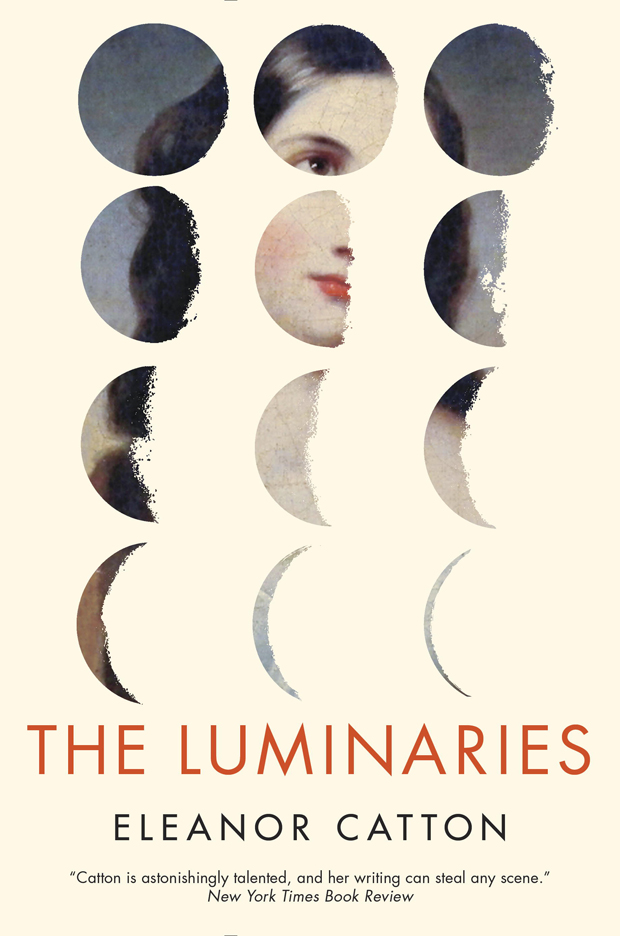
Working your way through chicken pox without the presence of mum is quite the daunting thing. There’s no one to hear you whine, make you soup and other nourishing things, regulate your medicine-taking, wash your hair in a tub while you stay in bed just because you happen to feel icky. What I did manage to do, however, in the two or three weeks when I was completely unable to get out of bed, was to catch up on a lot of reading. Being ill gives you the perfect excuse to read as you please, for you’re in no state to edit, read critically, make notes or turn your reading into opinionated articles immediately after. So I ingested a lot of pills, gummy candy and oily takeaway and in between re-read sections of Jonathan Strange and Mr Norrell because my friend happened to have a copy in his house. (I was in London. My own copy was in Stirling.) I read The Bone Season by Samantha Shannon, which I had downloaded a couple of months ago. I started reading The Luminaries by Eleanor Catton, which, of course is a very long book and will take some time to finish. One day when I was in the mood for poetry, I read The Absent Traveller: Prakrit Love Poetry from the Gathasaptasati of Satavahana Hala in a moving though somewhat opaque English translation by A. K. Mehrotra. The last three were on the Kindle, so the Kindle has obviously seen some use. (And got some love. I think I will buy it a cover now.)

The Luminaries by Eleanor Catton

I have much to say about The Luminaries, even though I’m not yet halfway through it. The novel interests me for several reasons. Of course it won the latest Man Booker prize. It also happened to be the longest book that’s ever done so. Now, long books are not my favourite thing. They are hard to move around (both from one city/country to another or even generally around in your backpack) and take forever to finish. I almost never buy a hardcover or even borrow one from the library, even when I really want to read the book and the wait for the paperback is long. I may not have bought The Luminaries if it wasn’t available as an ebook. And even if I did, it would have been much less likely that I’d actually finish it. Few of us can afford the luxury of reading a book solely at home any more, and that’s the only way a large hardcover demands to be read.

The other thing I have something to say is about the plot. From where I am currently in the novel I can see a glaring perspective error, but I’m hoping the author will justify it at a later point – the book did win the Booker prize after all – so this is not about that. What I’m enjoying about The Luminaries is that it actually has a plot that moves, without compromising on the kind of richness and nuance that is meant to characterize a ‘literary’ novel. Things actually happen. The story at the core is a murder mystery and the novel manages to keep it intriguing. It’s not richness and nuance for the sake of themselves, piled on a story that is basically insipid and a drag.

What I’m genuinely intrigued by, however, is the return of the very long novel. The other very long novel that everyone has been talking about is The Goldfinch by Donna Tartt. At some point I’m hoping to get to read that book. Do very long novels really work in this time and day? Am I the only person who struggles to finish them? Who knows. Now that I have finally managed to start off 2014 on this blog, maybe sometime later I’ll write more on the subject.

Book Week Scotland (25 November–1 December)

This week the Scottish Book Trust is celebrating Book Week Scotland with a mindblowing number of events (over four hundred their site says; I’m not going to count), not just in Edinburgh and Glasgow but all over the country. I’ve returned to Scotland only on Tuesday after a whirlwind book trip down south (detailed post on that soon!) and it just so happens to be the last week of class and assignment submission, so I’m missing out all the fun.

For those in my situation and those who aren’t even in Scotland, the Scottish Book Trust website has put up a couple of great fun things on their website. First, this Facebook game/app which answers Who in fiction are you? I had posted my own results on my Facebook page and it has caught on surprisingly well among my friends in India. The test has more answers than most other online tests and the takers seem to be overall quite happy with their results. (I turned out to be Charlie Bucket, if anyone’s interested.)

The other competition that I really like is called Pets Reading, for which one has to submit a photo of reading with their pets. Of course, all of us who own pets have a photo or two like that. This contest makes me miss my own cat back home in Calcutta, whom I haven’t lived with for about two years and who has probably ceased to be my cat in any sense of the term anyway.

Orijit Sen – River of Stories (Article in the Kindle magazine)

Backlisting, my new column to write about books and publishing, started this month in the Kindle magazine from Calcutta. The plan for the column is to take an interesting non-canon book from Indian writing in English each month and do a review/interview/anecdote-chasing/study of publishing history, as much as I’m allowed to do within the space of one article.

The first instalment is on River of Stories by Orijit Sen, presumably the first graphic novel in English to be published in India. I spoke to Sen at his People Tree studio on a violently rainy afternoon in Delhi, two days before I packed up and left the city. I came home to Calcutta, also flooded, and there was no sun, no air, no internet signal in my ground-floor bedroom. I wrote the article mostly at the newly acquired and very spacious quarters of Jadavpur University Press, in the intermittent (and very cheering-up) company of Tintin’da, Rimi’di, Deeptanil’da, Debo. Somak came over and fed me biscuits one day when I was quietly starving. Ah well, excuse the spurt of homesickness. Here’s the article that came out of those days.

River of Stories by Orijit Sen (Possibly the only extant copy)

Orijit Sen sits at his desk in an inner room of his sprawling and chaotic studio upstairs from the People Tree store in Hauz Khas Village. Inside a wooden bookcase at one corner of this room lives the only physical copy of River of Stories I know. It is tattered and discoloured, with the gum on the spine dried up and several of the pages come loose. This is not the copy I had read. As a young student in Calcutta six or seven years ago, I had downloaded the book in a CBR file from a torrent site I can no longer locate. When I mention this to Sen, he is not displeased. For the past many years, anyone who comes looking for River of Stories to the older People Tree store in Connaught Place is allowed to take a printout of the pages. The book has been out of print since its first publication in 1994.

Graphic novels in India have a chequered and not very long history. The medium came into widespread appreciation only after the publication of Sarnath Banerjee’s Corridor in 2004 by Penguin Books India. It was around the time when people started asking about River of Stories again, Sen tells me, but when he wrote and published the book—more than ten years before—there was little awareness and lesser to look forward to. The sixty-two-page-long book was a labour of love, written and illustrated over three years at Sen’s own expense—a leap considerably large for a comics creator, for the production process is more entwined with the creation of a comic book than it is with text. Art supplies and paper are expensive. Reimagining and drawing a panel is considerably more time- and labour-intensive than rewriting a paragraph in text. If factors such as page size, quality and texture of paper, whether the comic book would be in colour or in black and white are decided too late in the process, whatever has already been created may even need to be entirely discarded and recreated from scratch.

Fortunately for Sen, who was newly out of NID Ahmedabad and got interested in the Narmada Bachao Andolan around 1990, there were friends and others who understood his medium and as well as his vision. Through his participation in protests about the Narmada valley and his visits to the affected areas, he had befriended activist and musician Rahul Ram (key member of Indian Ocean, a band that would later produce the acclaimed hit ‘Ma Rewa’ from a folk song of the Vindhyas) and his then wife Amita Baviskar, a sociologist who was researching the tribal myths of the Bhilala people of Madhya Pradesh, inhabitants of the area in which River of Stories is based. His friends arranged for Sen to receive a publishing grant via the environmental-issues’ NGO Kalpavriksh—a government grant that went into the making of a book supporting an anti-government protest, Sen chuckles in reminiscence. With the grant he went out to find a printing press. His budget did not allow printing in colour but Sen insisted on using a particular kind of thick semi-glossy paper which the press he selected happened to have at that time. The size of the paper decided the page size of the book—at 8-by-11 inches, slightly smaller than an A4-sized page—and its quality lent crispness and detail to the black-and-white art, which Sen put to efficient use all through. The lettering was done by hand by Baviskar.

River of Stories is a succinct and visually sumptuous work on the subject of the Narmada Bachao Andolan. Vishnu, a young journalist from Delhi, goes on a journey to Ballanpur to do a story on the reactions of the protesters and the locals, following a road that Sen himself may have taken. Interspersed with the narrative of Vishnu is the story of Malgu Gayan and the birth of the river Narmada (known locally and in the book as Rewa)—soft grey and pencil-shaded, as opposed to the fluid, cartoonish quality of the Vishnu strand of the story—rendering each panel like a painting. The two narratives come together as the story progresses, and so do the two styles of art. This technique is not entirely unprecedented, but Sen’s use of it in River of Stories receives significance from the fact that the Narmada Bachao Andolan questioned a development model that prescribed the replacement of age-old—and till then quite independent and self-sustaining—tribal cultures with large-scale modern structures for agriculture and industrialization. When Malgu Gayan of myth steps into Vishnu’s world, the transition is seamless not only due to Sen’s mastery of his medium, but also because the adivasis of the Narmada valley are still largely similar in both attire and perspective about the world.

Elsewhere in the book, in an overwhelming three-page-long pullout, Sen—who considers the double spread the basic unit of a comic-book story—depicts the course of the river Narmada from its source in Ambarkhant to the Rewasagar dam under construction, a map that transcends the topographical and becomes, as he calls it, ‘a map of stories told and as yet untold’. The map is superscripted with stories spoken in many voices, from Malgu Gayan singing the creation myth of the river on his rangai to the adivasis protesting in Hindi and urban activists explaining the ecological and humanitarian consequences of the dam-building projects.

After having printed River of Stories, Orijit Sen went around bookstores in Delhi trying to distribute it. He was met with baffled questions—was it a book for children? Why was the spine so thin? Even the bookstores that hesitantly agreed to sell the book would accept no more than five or ten copies. A few hundred copies were kept by Kalpavriksh to be sold at its events, but the rest of the stock remained with Sen, to be sold over the next five or six years from his independent People Tree store. “My friends and the people at Kalpavriksh loved it,” says Sen, “but at that time there was no impact on the media or the general public at all.” The author Khushwant Singh— who was sent a copy of the book, enjoyed it and invited Sen for a chat afterwards—was the only one who covered it in the media when he mentioned it briefly in his column in the Hindustan Times. Reader responses were few and far between, but also sometimes charmingly unexpected—for instance, a letter Sen received from a schoolteacher in Ethiopia who had somehow landed a copy of the book. It wasn’t until ten years later, with the rise in interest in graphic novels following Corridor, that Amitabh Kumar—fellow comics creator and a member of the Pao Collective, a comics ensemble started by Sen and a few others—made a scan of the only remaining copy of River of Stories and put it up online, the file that had made its way to my hands.

Back in the 1990s, though, the only substantial return from River of Stories was a WHO-and-NACO commission Sen received to put together a comics anthology about AIDS awareness in Manipur three years later. Lack of funding kept him from creating other longer works, but he continued to make short pieces in his own time, including a series of one-page shorts called Telling Tales for the India Magazine. The greater part of his years, however, had been occupied in establishing People Tree, which now has two branches in Delhi and one in Goa. Today, as both the store and the Pao Collective have caught the interest of a receptive public, Sen intends to republish River of Stories with a new prologue for the Pao Reader in 2014. (The first book from the collective, called the Pao Anthology, was published by Penguin Books India in 2012.) Reverberating with his distinct creative sense in both story and art, one hopes this will bring greater appreciation to non-fiction comics creation in India.

And this is a link to the article on the website of Kindle.

Jerry Pinto – When Crows Are White (Chat/Article in the Striptease magazine)

I am back from Europe (from Germany and Budapest, specifically) after a short vacation, so here’s a story I wrote for Striptease, a new online magazine for comics. This was published on 18 October, the day I’d left for my trip. I had the chat with Jerry a long time ago – back in summer when I still lived in Delhi, and When Crows Are White was very new — but the article took months to materialize, partly because of my series of relocations, partly because I was returning to journalism after many years and kept writing and rewriting the first line. Nevertheless, this was a fun thing to do.

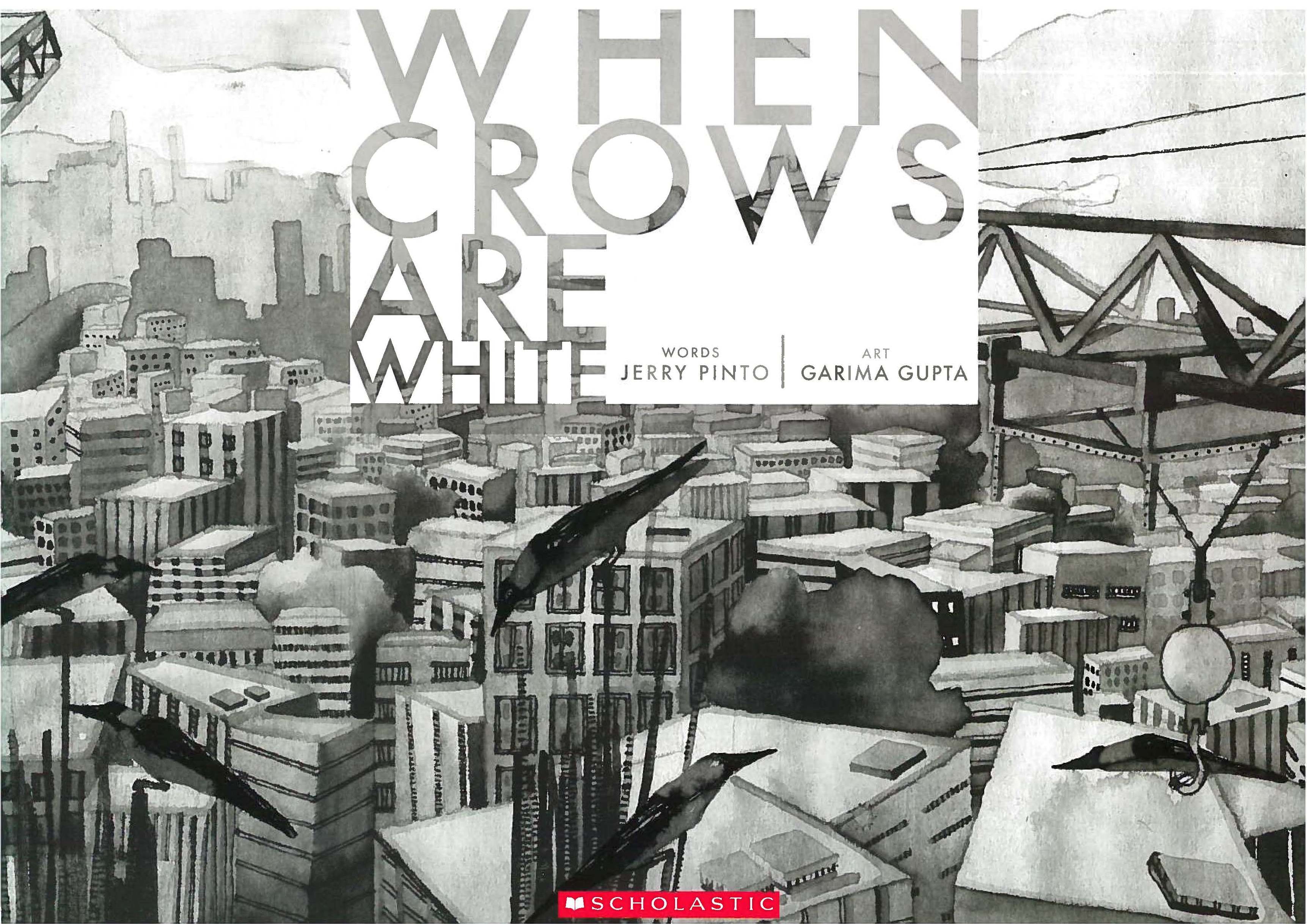
Jerry Pinto and Garima Gupta - When Crows Are White
When Crows Are White by Jerry Pinto and Garima Gupta

Jerry Pinto is a delight to interview but a daunting man to write about. The first is because he’s humble and engaging and startlingly perceptive about human nature. On the other hand, besides having claimed the Hindu Literary Prize last year for his debut novel Em and The Big Hoom, Pinto has a writing career behind him that is as old as twenty years. He is the author of eleven books, nearly each of them from a different genre. He hasn’t written a graphic novel before, but that probably made it the least surprising that this was going to be his next publication.

The book is called When Crows Are White and combines words by Jerry Pinto with black-and-white art by Garima Gupta. At 56 pages it’s a small book, but with wide pages for the reader to take in the detail and the eclecticness of the art. The characters are crows, an odd choice to make for a story, perhaps more so for a story for children, which is what it is. ‘I wanted to talk about the way in which we create the other, the way in which we define ourselves. In India, it’s one of the most important things,’ Pinto tells me over a chat conversation. ‘I wanted to write a fable. I tried several ways, but they ended up sounding preachy and horrible—so I let them fade into oblivion. Then one day, I saw a murder of crows attacking an injured crow. I tried to intervene but the injured crow pecked at me as if it would rather die at the beaks and claws of its own kind. And When Crows are White was born.’

It’s a story that goes straight for the heart, delicately sidestepping the familiar traps of cliché and patronization. Pinto, who has taught for many years and is an active campaigner for child rights, knows better than to take his young readers for granted. The framing story is a lesson in itself—a female crow called Saawri has a premonitory dream that the baby to be hatched from her egg is going to be white. In a murder of crows that is traditionalist to the point that every ‘unnatural’ crow is ‘culled’ without exception, that kind of anomaly simply has no space. To save the life of her unborn child, Saawri seeks recourse into the stories and myths of crows, and the reader follows her through them.

There are fascinating world-creation myths in the book, at least one of which I am sure I’ve never come across. ‘I think I invented the Aviana story, so yes, some of them came from my head,’ admits the author, adding smoothly, ‘but then, all myths have their origin in some head or the other, so I thought why not mine as well.’ The others are products of somewhat painstaking research, often with the help of the author Shanta Gokhale, whom Pinto calls ‘a national treasure for her spirit and her knowledge and her enthusiasm for other people’s ideas’.

Motherhood, child-hood (the act of being a child, rather) and bringing up children seem to be a recurring concern in Pinto’s work. Em and The Big Hoom—the fictionalized memoir of a son trying to save and survive his mentally unbalanced mother—is almost entirely constructed on this theme. When Crows Are White reads like an optimistic reversal of the novel, in which a mother tries to save her unborn child. When I put this observation to Pinto, he tells me, ‘I suppose there is some fascination with the way in which human beings are created. Perhaps that’s why the bildungsroman is such a big deal. Because it deals with the way in which a man or a woman may constitute himself or herself. I think, therefore, the primal fear and fascination with the figure of the mother comes from this recognition—that nothing will be as important in determining who you are. Which perhaps accounts for the image of the vagina dentata, the mother goddess who takes the baby in her arms and then bites off its head, the image of Kali, the power of Mariolatry that is at present shaking the Roman Catholic Church. But is it what I am fascinated by?’ He pauses, reflects, adds, ‘I’ll have to think about it. It’s an interesting observation, though.’

What brought him to the format of the graphic novel? ‘I think Arvind Krishna Mehrotra said it best when he said to me once in an interview, “When you’ve read a great deal of books, eventually you want to see your name on a spine.” And I spent my youth reading comics,’ says Pinto. ‘I read everything from Sad Sack to Amar Chitra Katha, from Tintin to Chandamama. I read Family Circus, Peanuts, Archie, and in between, only when the comics ran out, I would read books. Today, we call comics graphic novels so that we can escape the feeling that we’re being a little immature but a comic is a comic is a graphic novel is a graphic novel is a comic, if I may riff a little. And so, when I wanted to talk to children, I went back to Lewis Carroll’s Alice who falls asleep because her sister’s book has no pictures and no conversations.’

He offered the script to many publishers, initially with little success. One publisher advised him to work it into a short story to be put into an anthology of moral tales. Another said it wasn’t a book at all, just an outline. It finally struck a chord with Sayoni Basu, then editor at Scholastic India, who accepted it and brought Garima Gupta on board. Pinto and Gupta did not meet in person until a long time after the book was finished. And while he believes that the art in a graphic novel is always a meta-narrative, Pinto does not quite mind the lack of prior acquaintance. ‘I have never believed in doing someone else’s work,’ he says. ‘If I work with a designer, I may make suggestions, but mostly I’d leave the designer alone. I speak from my magazine experience.’

He enjoyed writing this book, but Pinto doesn’t know if he’ll write another graphic novel. ‘If something moves under the skin, I’ll do it again. It’s not easy. I’ve never been rejected as many times as I was rejected with Crows, and who likes being rejected, however kindly? So there’s always that conscious moment when you’re thinking, Never again,’ he says, but adding, ‘I’ve felt this for so many things. No more anthologies, I’ve said to myself. No more collaborations, I’ve said to myself. No more scripts. But somewhere deep inside, the need to say is surfacing, and suddenly one day, it’s there again and it’s in a form that you’ve just forsworn.’ As enchanted readers, I guess that’s something we all hope.

This is a link to the published article.