There isn’t a book of fiction, theory or non-fic narrative that I like and find too embarrassing to admit. This, however, is a different story altogether. ‘Belief’ is a much abused (and rather murky) word in our time, and I won’t be murdering anyone for being born in the wrong month; but zodiac personality analysis does happen to be one of my favourite pastimes. It’s a subject I broach cautiously into conversations, only after assessing the other person’s level of tolerance for such. I am deeply defensive of the habit, less of the system itself than of my complete right to believe in it as long as I keep my faith to myself. (I.e. Go mind your own business, now.)
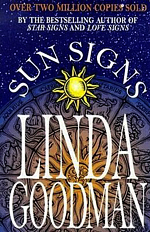
Sun Signs by Linda Goodman
It all began with this book, which I did not buy for at least four years since I started maniacally reading it, borrowing it in turns from different people for the sheer mortification of being caught owning such a book. The copy that I finally bought last year has already become well-thumbed, along with my copy of Love Signs. I will un-approve all snide, disapproving, preachy comments to this post. Bye bye.
Yet again a problematic question, for although I love short books, I’m not sure up to how short may be considered a ‘proper’ book. So I’m going to write about this little book that I recently bought and loved very much.
Lyra's Oxford by Philip Pullman
Lyra’s Oxford contains a short story, a fictitious map and a couple of other meta-fictional knicknacks. I love maps of fictitious locations and meta-fictional extras, which is why The Black Dossier is also my favourite volume of The League of Extraordinary Gentlemen. I had borrowed all three of core books of His Dark Materials from the library, but when I saw this one I had to buy it. I love the A-format, the red cloth binding and pseudo-woodcut illustrations. The series itself I don’t like consistently but this book is just perfect.
Long books are the bane of my life. The size of a book can instanty wither my most sincere intention to read it. All through my training in literature I have carefully sidestepped triple-decker Victorian behemoths, maintained a respectful distance from the likes of Joyce and Dostoevsky, with the result that the longest single-volume books I’ve read (page-wise) are all anthologies, poetry or short story collections, complete or selected works of certain authors and things like that. On the other hand I could write about several serieses, if you’re asking for the longest narratives occurring in the same universe and (usually) written by the same author. It’s the longest single work of fiction or non-fiction that puts me in trouble. Therefore, although this will not feature in any longest-books list in the world, I must mention The Godfather.
The Godfather by Mario Puzo
Once again, this selection is partially because this is a book I really want to write about. A book that I read nearly ten years ago, in middle school and much before watching the films, back when it had felt too shocking and irresistible to lose interest in before finishing. I wouldn’t have remembered it was so long ago if the book hadn’t come up in a conversation with R sometime back, for I had (rather indiscreetly) proceeded to impose it upon her at the tender age of eleven or twelve. I followed up The Godfather with Omerta which came in the same volume. I haven’t read The Sicilian, nor any of the non-Puzo sequels. I don’t think I’ve ever gone back to the novel either, not when I watched the films, not when I was heavily reminded of it while reading Men of Tomorrow in the first year of college. Maybe if I read it again I’ll find it less impressive. Maybe I will read it one of these days. But then I am perfectly content with the way it is right now inside my head.
It’s a fact, marriageable and interesting (male, but also female) characters form the biggest minority in novels. This may be because the characteristics that make a good husband — especially a certain stability of temper and circumstances — are exactly the ones that ruin the chances of a good protagonist. This would’ve been a different post if the query was for a book whose main character I fancy, but none of these characters I’m thinking of (Harlequin, Macheath, Sherlock Holmes, Heathcliff, Lord Henry Wotton, Gora, Lord Vetinari, Lucifer in various avatars, even Humbert Humbert) is remotely good for marrying. Shadow from American Gods is a glorious exception.
American Gods by Neil Gaiman
Gaiman hits this admirable balance by creating a protagonist who used to be married, but with his wife recently dead he is a free man for the duration of the novel. Shadow’s husbanding (yes I know, move on) is flawless, he is still in love with his not-very-dead wife but not so much in love as to be unhealthily obsessed, he is nice and polite to other women, and at the end of ‘The Monarch of the Glen’ I think he finally gets together with someone else. I love how he is strong and silent but not unintelligent, does most things well without giving in to self-importance, the way he constantly strives towards the ordinary despite his undeniable extraordinariness. I’ve been re-reading American Gods (which has just finished ten years of publication) and loving every bit of the characterization of Shadow all over again, even though the ending of the novel continues to disappoint me a little.
I must add that Mr. Darcy from Pride and Prejudice is likely to make a good husband as well, since he applies so much discretion in choosing his woman. But then, Austen left us no evidence to be too sure.
When I started filling up this challenge (and the other), I was looking ahead to a month with not much to do. I hate that kind of stupor, so writing about a book and a song each day seemed like a good routine to keep the mind from sinking. That plan has gone for a toss, of course, and I don’t particularly regret it.
Anyway, back to the subject of this post. To begin with, if there was a book whose protagonist was very much like me, I doubt I would’ve even been sitting at a desk in an ad firm (which is infinitely better than sitting at home and festering under the weather, nevertheless) writing this post. Well… no, that’s not strictly true. The best books are often written about people who are not particularly interesting in themselves. There must be books about people whose lives are quite like mine, and I’m afraid most of these books would be chick lit. I have not read them. The only chick lit that comes to my mind is Bridget Jones’ Diary, and I don’t feel like Bridget Jones at all. Which brings me to the point — do you fill this query with a character whose life is most similar to yours (and then, how do you manage to see your life whole?), or a character that feels the most like you?
The English Patient by Michael Ondaatje
This is a difficult and depressing book. Last year I gave it to R to read — she likes most of the books I like (and more) — and she didn’t take to it at all. Most people don’t. But all I remember feeling at the time of reading The English Patient was the overflowing relief at the fact that someone has written such a book at all. That such a book can be written, that such characters can exist and are acknowledged, that it makes you just a little less strange, which is a false sense of comfort, of course, but it’s better than many other things. I write of that particular kind of madness that springs out of intense misanthropy and intense ardour, the kind of life that’s lived by one’s own obsessions and creates its personal godheads, when your entire existence is one continuous act of worship. As I read this novel I divide my first-person loyalties between Almásy and Hana, who are both its protagonists, who are more similar to each other than you may care to think. I think Almásy wins out most of the times — with his heartlessness and his possessed love and his affinity for deserts and the way he turns history and philosophy to music — but at times I can’t really tell. :)



 Mimi Mondal
You must be logged in to post a comment.