Blog/News

143

Earlier this month I shifted to London, with a brief, muddy (but otherwise delightful) detour through a boutique Welsh village for the Hay Festival. Packing and moving continues to be the horror that it is. Always too many books. But London is a relief. Another week in remote Stirling would probably have driven me insane.

The house in London is in front of a three-way crossing. There are corner shops and grocers and restaurants and takeaway joints all along the road. Three doors down is the Corvus’s favourite Irish pub, which is centuries old, back from the time when this part of the country was still known as Middlesex. (We located it on an 18th century map of Middlesex the other day.) But what I like the most is the large green park right across the road from the house, to which my large window opens out, and there is warm, glorious light all day. This room is smaller than any room I’ve ever lived in. Especially when the Corvus is down here, accompanied by his steampunk laptop, we constantly have to throw things aside to be able to move. But it feels large. Nearly as large as the room in the Other City before the west-facing window had to be blocked up, although that room was easily twice its size. But especially with the long – really long – days in London, it feels like I am swimming in light from about 5 in the morning to about 9.30 at night. On days that are sunny, like today, I am almost convinced that I can keep the depression at bay for ever. Of course, this bright weather will not last. I was here in January too, and I was ill, and it was so endlessly miserable that for the longest period I just wished I could die. My body is yet to recover from the damage of those weeks.

If I’m going to miss Stirling at some point, the feeling hasn’t struck yet. I do miss having an ensuite bathroom, but there’s little else. I wish I could attend more classes with two of the people who taught me, but nine months is too little to form an attachment and I wonder if I actually miss them. Occasionally I miss saving more money, but I don’t miss not having anything to spend money on. Stirling was one thing off the checklist, one lesson learnt – I don’t think I’ll ever be able to live in a small, picturesque town or village. The beauty and serenity of nature drives me up the wall in precisely a week. I don’t want to live anywhere which is not a major city, with a thriving cultural scene and interesting people from a range of backgrounds and supermarkets round the corner and actual public transport.

I hope I’m going to have enough peace of mind to actually study and write.

142

Sometimes I think I could write in this blog more often if I actually knew who read it. (Or who didn’t, equally important.) I know Moplah and Bedatri occasionally wander across to it (Hi Moplah! Hi Bedatri!) but our generation – and everyone else on the Internet – has quite decisively ridden out the personal-blogging wave. And I’m not really a book blogger. I don’t have the time or the tenacity, besides being privileged to live in the middle of nowhere in the Scottish lowlands where even the GPS network names different places between one room and the next. (The University of Stirling is not actually in the one-horse town called Stirling, where the last exciting event took place in the 14th century and may be found documented in the film Braveheart. Unless you count the debatable first sighting of the Slenderman in the 1986 Stirling Library Blaze. And Alexander Court is bounded by forestry on two sides, a cemetery on one and a golf course on the fourth. Welcome to the A___-End of the Universe, as the Corvus calls it.)

Halfway through last year I decided to turn the blog into a repository for all the articles I write for Kindle and other places, but it doesn’t feel like an immediate concern. I can do it all at one go whenever I really need to, creating back-dated posts – it’s not like the world is about to end for the absence of my tantalizing ‘original versions’ – and I’ve had other more important things to do. Honestly, when you’re in your proverbial Late Twenties, sometimes the ‘other more important things’ end up becoming making a list of things to order from Tesco. Trying (and failing) to cook dinner. Endless agonising about what the future will bring. Even where the next month’s money is coming from. All the things that do not make halfway decent reading.

It’s been cold, dark and rainy for about two weeks now, immediately following a brief elusive phase of bright blue skies and flowers. I do not know why it should be so, except that you do not ask such questions of British Weather. The worst result of it all is that I had really hoped to go swimming every single day for my final month on campus (which is this), and I haven’t managed to drag myself out of the room ever since I nearly caught a cold the first day. Every morning I flip open the blinds and look at the leaden skies… and my spirit just wilts. I’m half-torn between being morose about leaving and not being able to wait.

*

In a way, with the dying of the thriving communities that surrounded them about 5–6 years ago, our blogs have reverted to the being the noiseless, semi-private public spaces that we’d originally hoped them to be. They’re out on the Internet, but nobody but your close friends, hopeful romantic aspirants or any other description of stalker probably reads them. You can once again post a bit of inane poetry or what you did today without the pressure of being interesting to a ‘readership’. I cannot say I entirely dislike the freedom.

This particular blog, which is going to complete four years in a couple of months, was created when the personal-blogging wave was already on an ebb. I have used it primarily for cryptic private musings, more often than not to practise new word or turn of phrase. I was reading through the archives today and they make me quite happy. There’s very little I wish I had never written. Often, I wish I had written more.


On Reading and Publishing Controversial Literature

A version of this article was published in the April 2014 edition of Kindle Magazine.

In the last two months, two books by the American scholar Wendy Doniger have come under fire in India – The Hindus: An Alternative History published by Penguin India and On Hinduism published by Aleph Book Company. I have not read either book. Hinduism or Indology is not my area of expertise. I was born in a Hindu family, but a practitioner ¬or a member of the community is not the same as a scholar. Doniger has studied Hinduism to a much greater depth than me, as have Dina Nath Batra, her challenger. My opinion on either of their views on Hinduism itself would count as little more than the uninformed layperson’s opinion. However, there are certain ideas that surround the banning of the two books that do not entirely concern with the content of them. In this article, I will try to discuss a few of them.

The first idea is about freedom of expression. Should all ideas be freely expressed, encouraged and disseminated, irrespective of whether they threaten to hurt certain individuals or groups? The answer to this is not a simple yes, which, of course, is the premise on which conservative lobbies like Shiksha Bachao Andolan Samiti exist. Even the most liberal of us have topics we have reservations about. Most of us will be squeamish about the freedom to express works glorifying child pornography or rape. The same can be said for our stand on controversial scientific research; debates are strong on topics like human cloning or advanced research in weapons of mass destruction. Freedom of expression and enquiry in themselves are not an absolute ideal. The delicate dance between freedom of expression and the need to protect, conserve, leave alone what’s good has existed since the birth of human civilisation.

This brings us to the second idea of “what’s good”; and who it is good for, and who decides. In the case of the books by Doniger, it is Mr Batra and SBAS deciding they’re not good for Hindu culture and community. As we can all see, this immediately brings up a number of problematic questions, especially if you identify as Hindu. Do you accept Mr Batra as a spokesperson for yourself? Does the version of Hinduism you, your family or your community practises conform with Mr Batra’s (right-wing, upper-caste, chauvinist, nationalist) version of Hinduism? Have your sentiments been hurt by the existence of these books, one of which has been around in India for about four years and another for at least one? Obviously, the idea of “who it is good for” is not as simple as it seems.

Now to the third idea of “who decides”. Of course, major socio-political decisions are not made by each individual but a person or group of people acting on behalf of the individuals. In a democratic system, each individual member has the choice to some extent in selecting the people who represent them. Because India is a constitutional democracy, we can hope to vote away our political leaders if we dislike them. No such measure of control or transparency exists over religious leaders or moral guardians, who are nearly always self-appointed. They are not exactly law-abiding or answerable to law. As such they pose an unquantifiable threat, since we cannot predict exactly what they like or dislike, or which precincts they will not hesitate to violate for their convictions. They dismantle the very framework of democracy that allows them a voice and veneer of reason.

*

Much criticism has been aimed at Penguin India for giving up The Hindus too easily to the threat of SBAS. The voices have probably been harsher because it is Penguin ¬– part of the largest publishing conglomerate in the world (now Penguin Random House), besides being the publisher with an illustrious record of defending banned books, from Lady Chatterley’s Lover by D.H. Lawrence to The Satanic Verses by Salman Rushdie. Authors and intellectuals, most notably Arundhati Roy, have been shocked and offended by the apparent cowardice of Penguin India. What we forget when we make these accusations is that publishing is, eventually, an industry.

Certainly, it is an industry with a very unique position. Books, unlike cement or mobile phones or processed food, are a “cultural product”. They don’t just satisfy a physical or material need; they educate, instil opinion, construct taste. Cinema or music are cultural products as well, but they are accepted to be much more populist products than books. Even in their mainstream (i.e. most populist) avatar, books are perceived as more serious business than cinema or music, never entirely mere means of entertainment. Avid readers are a discriminating lot, always complaining about their more frivolous counterparts, always lamenting the erosion of quality or taste in reading as a whole; in a way that a patron of avant-garde cinema, for instance, does not identify with a person who enjoys David Dhawan’s films. The “literary field”, as Pierre Bourdieu calls it, is a space of very specific beliefs and proclivities.

Writing in the 1980s, Bourdieu correctly observed that profit in the field of cultural production is not a direct calculation of numbers. “Symbolic capital” is as important as economic capital, and manifests in such forms as prestige, authority and overall perception in the literary field. Economic profit can only be made by projecting a certain “disinterestedness” in economic profit – by publishing books perceived to be “good” even if they don’t return the investment made in them; by not publishing too many “low-quality” bestsellers that reduce the prestige of the publishing house; by propagating and supporting certain ideas, beliefs and notions perceived to be culturally valuable. But then, most “trade” publishing houses in the world are capitalist businesses ¬– i.e. they are sustained by their profits from sales and not by charity, public money, grants from individuals or larger institutions – so the interest in keeping an economic margin cannot be entirely dismissed. It is a very fine line to tread.

The line has become more elusive in the 21st century with the literary field having taken a serious blow from the spread of the Internet and the rise of major online businesses like Amazon, Google and Apple. While part of the literary field ¬– especially the discriminating readers and critics – remain as merciless as before, the publishing industry has diminished significantly in power and authority over the last decade or so. When we argue for the worldwide resources of a company like Penguin, we must also take into account the scale of challenges that such a company now faces worldwide. Publishers are no longer considered as sacrosanct as they were once. Increasingly, authors choose to bypass them entirely, self-publishing books that often become bestsellers and also receive literary appreciation, making their place in the literary field. On the Internet books are pirated more freely, or sold cheap at very little profit to the publishers. If nothing, the fact that Penguin has merged with Random House only a few months ago should tell us about the state of the company’s power in shaping culture in today’s world, as well as the state of the power of the publishing industry overall. If we have arrived at an age that relieves publishers of their role as cultural “gatekeepers”, we must also choose the option of either leaving the gates wide open or finding new means of gatekeeping.

The risks of such gatekeeping have also become incalculably high because of the unquantifiable threat of religious extremism, which has escalated through the second half of the 20th century and continues to the day. When Penguin UK decided to keep The Satanic Verses in circulation in 1989, no one had foreseen the scale of reaction that Ayatollah Khomeini’s injunction against the book would trigger. The fatwa – issued in a country different from that of the book’s publication and therefore not even legally tenable – resulted in book burnings across the world, bombing of bookstores, bans in twelve countries, life threats to the author and everyone involved in the production and distribution of the book and the assassination of its Japanese translator in his own country. Such an injunction, it is easy to see, cannot merely be countered with economic or even symbolic capital, such as one may demand a company like Penguin to invest. (Freedom of expression or the life of an innocent employee? You choose.) And while Hindutva extremists has not yet achieved the scale of global Islamic terrorism, one cannot perhaps rest assured today that they don’t have the willingness or resources to do so.

I will try to end on a positive note. The Internet, while it has dealt a serious blow to the traditional literary field, has also opened up new ways of communication and mobilization, and I wonder if some of these cannot be used to greater extent against censorship. Soon after Penguin India accepted the ban on The Hindus, someone put up a blog with links for the book to be downloaded, which soon went viral both among supporters and detractors (most of whom, ironically enough, had never heard of the book before). Two petitions on Change.org have collected more than 4,000 signatures. Articles and blog posts have been written; social networks like Facebook, Twitter and Reddit have been abuzz with discussion on the subject. More people have read or talked about The Hindus in the last two months than the four previous years of its existence. I doubt that it’s ever truly possible to ban a book (or an idea) in the Internet age. But this is not the publisher’s war to fight. We can no longer depend on gatekeepers to herd us towards this moral direction or that – as a culture, we have outgrown that state of innocence. Let us ditch the clichés and look for new ways to exercise our freedom of expression. There has never been a better time.


Some people REALLY don’t like Wendy Doniger, right?

The first was the book called The Hindus: An Alternative History from Penguin Books India, published nearly four years ago. I hear that the organization called Shiksha Bachao Andolan Samiti has been campaigning to pull it down ever since then, and in February 2014 they succeeded. SBAS (and its representative Dina Nath Batra) has promptly gone and petitioned against On Hinduism, another book by Doniger, this time published in India by Aleph Book Company. Not being in India, not even being at any particular city centre where conversation about Indian writing goes on (say London), not having any particular resource into the Indian publishing scene any more, besides having been physically ill for a long time, I have not participated actively in the discussion. More knowledgable, more experienced people were speaking, so I kept quiet and read. I also read a lot of comments by the public on the Internet – in the comment section of the Change.org petition, on Reddit and other places. Someone also put up The Hindus for download on a blog, making it accessible for everyone who wanted to read the book before they talked about it.

I downloaded the book from the blog but haven’t managed to read it. Hinduism is not my area of scholarship. I was born into a Hindu family and haven’t changed my religion, but most of my knowledge about Hinduism come from mother and grandmother, the occasional temple visit, a Sunday column on the Mahabharata written by Nrisinghoprosad Bhaduri in Bartaman in the late 1990s… all in all, nothing that makes it an expert opinion. Reading one book out of the blue wouldn’t have made my opinion relevant in any larger scheme of things. I may be Hindu, but I’m not an expert on Hinduism. Notice the difference.

Who is an expert on Hinduism that you should listen to? Unlike people under different sects of Christianity or Islam, most Hindus I know seem to be brought up under very different traditions. Wedding rituals vary in detail from family to family, besides varying widely from community to community, usually to gentle confusion and overall amusement. In Calcutta, where I grew up, no one was vegetarian, not even the Brahmins. (Pledging to sacrifice a goat at Kalighat if a wish was fulfilled was quite a common practice among the faithful.) We all gave aaroti at Durga pujo – the biggest religious event on the calendar – and we all did Lakshmi pujo and Saraswati pujo at home. Some of my friends’ parents also did Biswakarma Pujo at home, and Ganesh pujo during Haalkhata in April, but my mother had explained to me that you only did those if you were into business, for Biswakarma was the god of craft and Ganesh presided over industry. (Both of my parents were into professions.) That was Hinduism enough for them, and for most people around whom I grew up. They never thought of themselves as anything but faithful Hindus. Growing up, I never felt encouraged to defy Hinduism, proclaim atheism or any other kind of thing that the conservatives decry. We were conservative, even though that was not the primary agenda of our lives.

This is the reason why I have always felt profoundly alienated by the uniform model of Hinduism that has steadily grown in strength over the last couple of decades. These radical, adrenaline-dripping, violence-threatening men in saffron. (In my childhood, the only men in saffron around were the monks of the Ramkrishna Mission, who ran schools and charities. The only ‘role model’ in saffron was Swami Vivekananda, who seemed to have written more or less reasonable things.) This whole controversy about the Ram Mandir, these demands for an apparently idealistic Ram Rajatya. (Ram was not even a deity we actively worshipped in Bengal. I’ve never stepped into a Ram Mandir.) These TV shows that build such huge deals out of Karva Chauth or Shiva Ratri, neither of which I have seen any of the women in my family celebrate, even though they were sufficiently religious and devoted to their husbands, probably to extents that a feminist wouldn’t approve. The condescending vegetarianism, the refusal to even touch a utensil that a non-vegetarian has eaten in. The caste distinction. This Hinduism has very little to do with my Hinduism. How much does it have to do with yours?

I can’t say I like The Hindus or any of Doniger’s work, not even read her ever. There is very little definitive that I know about Hinduism. I’m not sure if there is much definitive to know. If I judged solely by what my family has taught me, hey, even not giving aaroti at Durga pujo is offensive. (That’s the first step towards atheism, don’t you know?) But we don’t get offended if our friends from other communities don’t follow rituals that are absolutely essential in ours. We didn’t get offended by The Immortals of Meluha, filled with so much inaccuracy about history and religion, and read by such a large number of people who were gullible enough to take its narrative for truth. (This might not have been the author’s plan or intention, I agree.) Surprisingly, nor did these purveyors of eduction and religious correctness. On the other hand, how many of us had read The Hindus before this controversy broke out, even though it’s been around for nearly four years? How many of our religious feelings have been outraged? How much enmity promoted between different groups on the grounds of religion, etc?

You see, it’s really not a concern with the quality of a book, or the amount of misinformation in it, or the extent of its possible impact. That’s not the concern of the bringer of the petition, and that shouldn’t be yours when you choose to respond to it. It’s not about whether you like or dislike a certain book. It’s about resisting people who call it their right to dictate other people’s actions. If you’re not absolutely similar to those people (as most people in India, even Hindus, are probably not), one day they may object to one of your beliefs, and then you will be required to get rid of it. How would you like to stop eating your meat? What if one day Durga pujo or Pongal is declared to be incongruous with ‘mainstream’ Hinduism? (Kali pujo has already fallen out of favour. Everyone celebrates a sanitized, vegetarian, laddu-eating kind of Diwali now; there isn’t much craze for that dark, bloody, rapidly exoticizing form of goddess worship.)  Section 377 has been reinstated. Raped woman are being officially accused of ‘having asked for it’. Is it so difficult to see the country fast being driven into a kind of militant, hardlined ‘Hindu’ dark age? Is it so far-fetched to be afraid of it?

*

The other conversation about Wendy Doniger’s books has been how easily the publishers have yielded to the threats. Both Penguin Books India and Aleph Book Company have withdrawn the books, without going to court or standing up to the threats in any other way. Criticism has been levelled especially against Penguin, which has a glorious history of supporting its controversial books, whether it was Lady Chatterley’s Lover or The Satanic Verses. A couple of years ago (and obviously on a different context), Chiki Sarkar, the publisher of Penguin Books India, had issued a statement about banned books. According to her, in India it’s possible for anyone to bring an injunction against a book, and from any part of the country, which would be effective nationwide; and which makes it that much harder to fight them.

I somewhat understand where Chiki is coming from. Book-publishing over the last decade or so has become a far more difficult business than it used to be. The cultural authority of publishers has diminished a great deal. This whole matter is another can of worms, but suffice it to say that increasing literacy, Internet and social media access mean that a lot more people today find it possible to call themselves authors, experts, critics, publishers etc without having arrived through the conventional channels. This makes the mix much more democratic, which means it also adds a lot of factors – both positive and negative – which makes it several times more complicated. Penguin Books India publishes more than 200 books a year. Aleph publishes fewer, but its parent company Rupa publishes nearly as many. As physical commodities, books are fragile, inflammable, easily destructible in several ways. Both companies have to depend on mass-market sales to survive, and the mass market is easily influenced by populist Hindu nationalism. The profit margin of books is low. Publishing houses, even the large ones, are nearly always short on manpower. Where are the time, money, people to fight these difficult legal battles?

It’s not as if legal battles were easier in an earlier generation. But they were somewhat more tenable because they still added to the image of the publishing house, and image was the cultural capital that converted to profit. These days, when the biggest profits of Rupa possibly come from the sales of Chetan Bhagat and the biggest profits of Penguin Books India possibly from Ravinder Singh, that old theory of cultural capital does not strictly hold true. (In simpler terms, the people who spend the most money on these publishers’ books are probably not the same people who would like to see/support the publishers in fighting for Doniger’s books. What’s worse, they may even lose some of these buyers if they choose to stand by her.)

On the other hand, I wonder if this wide reach of the social media can’t be used to the greater good in more innovative ways. We have already seen how more people downloaded and read The Hindus last month than they did in the last four years of its existence, even as Penguin Books India was recalling stocks from the bookstores. As of today, the Change.org petition has over 4,000 signatures. If each of these signatories could be persuaded to contribute a small amount of money – if we crowdsourced the funds, if one or more people with the legal expertise volunteered their time and skills – would Penguin or Aleph agree to contest these injunctions? Could that be done?

[unfinished]

Update on life, reading, very long novels and other things

I haven’t written much in the past couple of months, not here but not elsewhere either. I missed writing for the February and March issues of Kindle, had to extend the deadline on my dissertation proposal and several other things. The reason, besides lots of travelling back and forth, is that I ended up developing a rather serious case of chicken pox. Quite the last thing I expected to happen during this year abroad, but that is why Murphy’s Law is a thing, isn’t it.

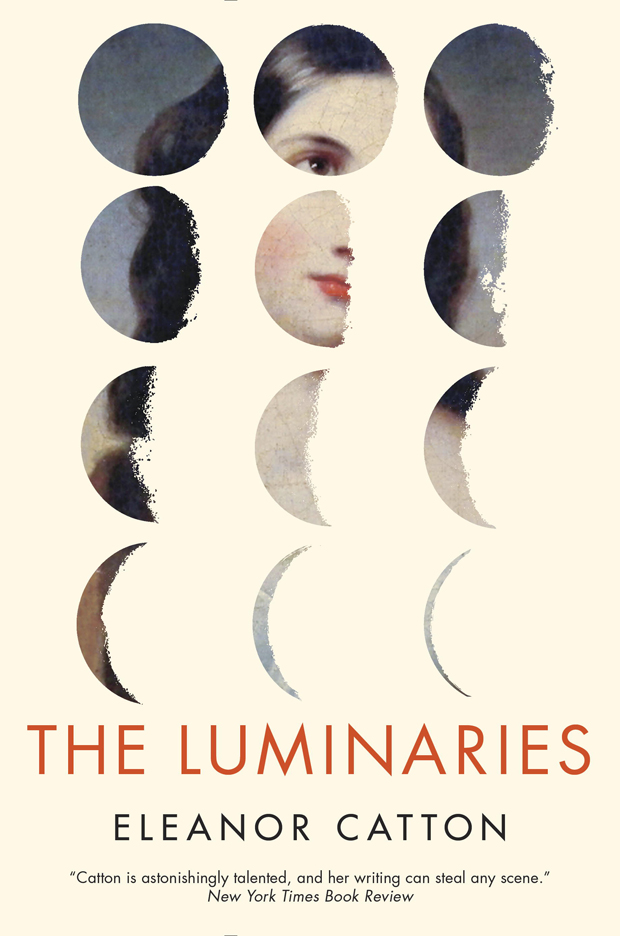
Working your way through chicken pox without the presence of mum is quite the daunting thing. There’s no one to hear you whine, make you soup and other nourishing things, regulate your medicine-taking, wash your hair in a tub while you stay in bed just because you happen to feel icky. What I did manage to do, however, in the two or three weeks when I was completely unable to get out of bed, was to catch up on a lot of reading. Being ill gives you the perfect excuse to read as you please, for you’re in no state to edit, read critically, make notes or turn your reading into opinionated articles immediately after. So I ingested a lot of pills, gummy candy and oily takeaway and in between re-read sections of Jonathan Strange and Mr Norrell because my friend happened to have a copy in his house. (I was in London. My own copy was in Stirling.) I read The Bone Season by Samantha Shannon, which I had downloaded a couple of months ago. I started reading The Luminaries by Eleanor Catton, which, of course is a very long book and will take some time to finish. One day when I was in the mood for poetry, I read The Absent Traveller: Prakrit Love Poetry from the Gathasaptasati of Satavahana Hala in a moving though somewhat opaque English translation by A. K. Mehrotra. The last three were on the Kindle, so the Kindle has obviously seen some use. (And got some love. I think I will buy it a cover now.)

The Luminaries by Eleanor Catton

I have much to say about The Luminaries, even though I’m not yet halfway through it. The novel interests me for several reasons. Of course it won the latest Man Booker prize. It also happened to be the longest book that’s ever done so. Now, long books are not my favourite thing. They are hard to move around (both from one city/country to another or even generally around in your backpack) and take forever to finish. I almost never buy a hardcover or even borrow one from the library, even when I really want to read the book and the wait for the paperback is long. I may not have bought The Luminaries if it wasn’t available as an ebook. And even if I did, it would have been much less likely that I’d actually finish it. Few of us can afford the luxury of reading a book solely at home any more, and that’s the only way a large hardcover demands to be read.

The other thing I have something to say is about the plot. From where I am currently in the novel I can see a glaring perspective error, but I’m hoping the author will justify it at a later point – the book did win the Booker prize after all – so this is not about that. What I’m enjoying about The Luminaries is that it actually has a plot that moves, without compromising on the kind of richness and nuance that is meant to characterize a ‘literary’ novel. Things actually happen. The story at the core is a murder mystery and the novel manages to keep it intriguing. It’s not richness and nuance for the sake of themselves, piled on a story that is basically insipid and a drag.

What I’m genuinely intrigued by, however, is the return of the very long novel. The other very long novel that everyone has been talking about is The Goldfinch by Donna Tartt. At some point I’m hoping to get to read that book. Do very long novels really work in this time and day? Am I the only person who struggles to finish them? Who knows. Now that I have finally managed to start off 2014 on this blog, maybe sometime later I’ll write more on the subject.